
Qasr al-Hajj
Qasr al-Hajj is a large circular fortified granary in western Libya, built in the medieval period to store grain, olive oil and other goods for local families. The building is famous for its high, round outer wall and for the many small storage rooms arranged around a central courtyard.
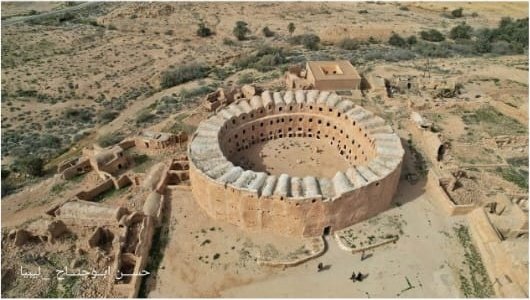
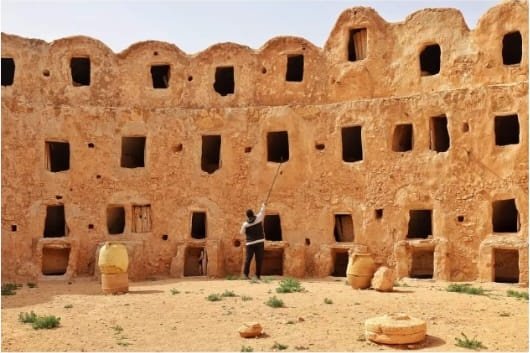
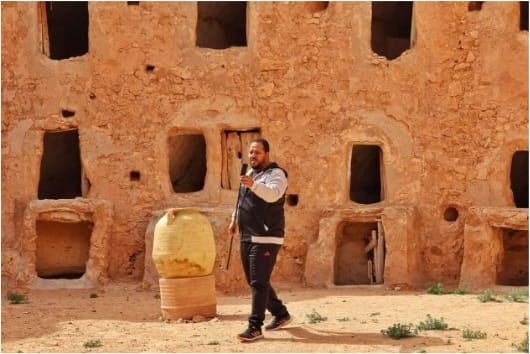
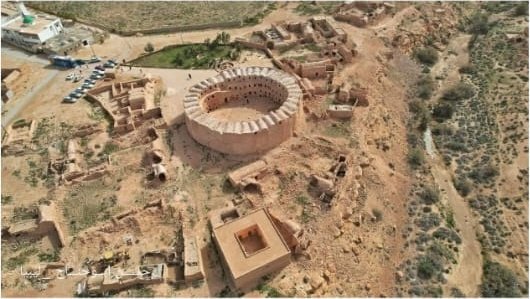
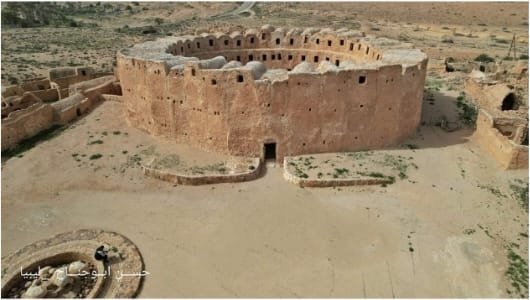
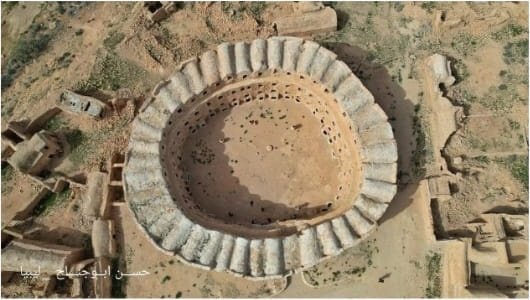
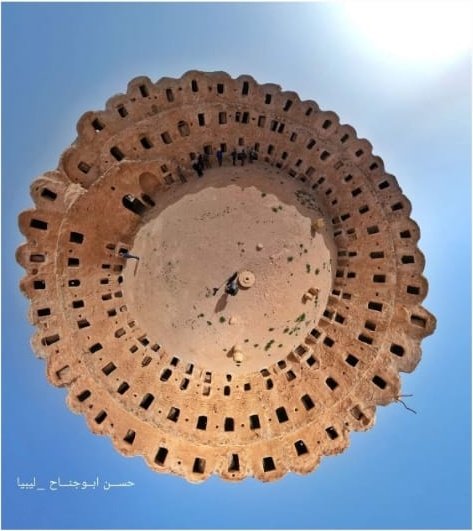
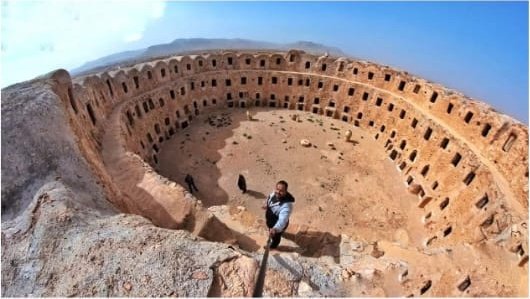
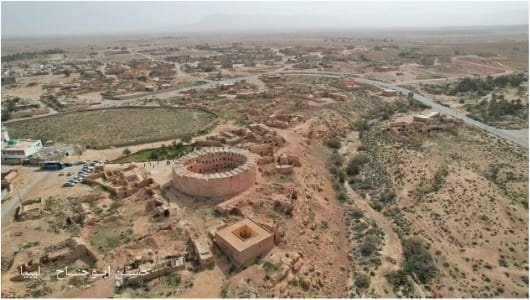
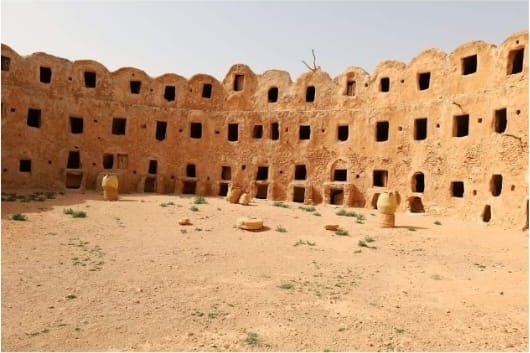
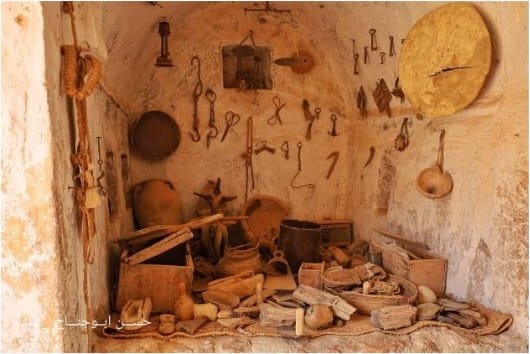
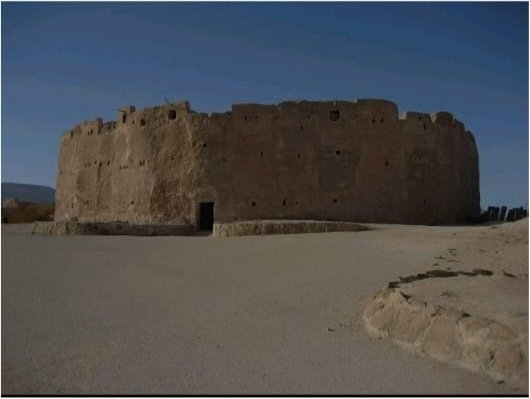
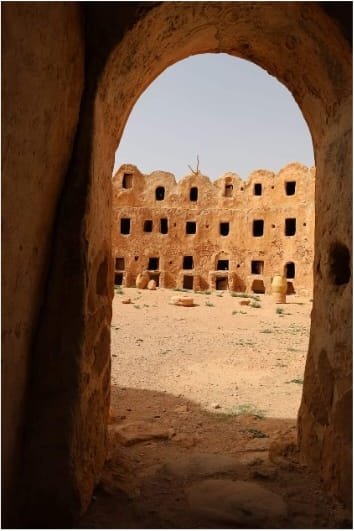
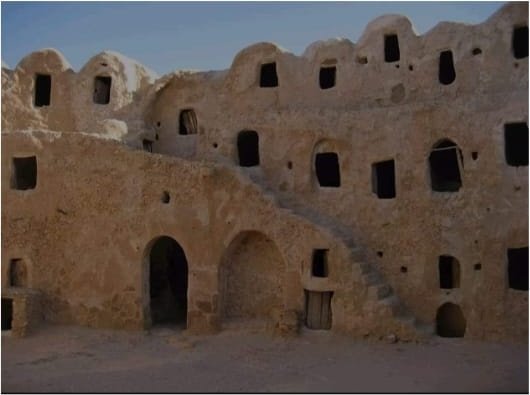
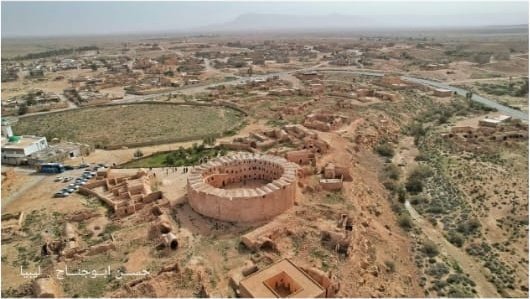
Unique circular design. The granary is built as a round fort with several levels of small vault-like chambers opening onto an inner courtyard. This form is unusual and makes the building instantly memorable for visitors.
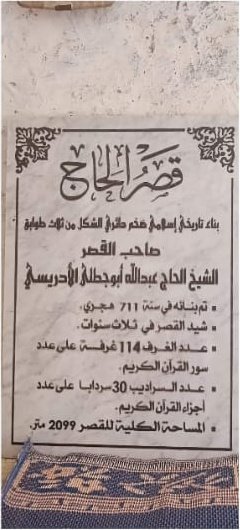
Historic community role. The site was built in the 12th–13th century and acted as a communal storage place. Families rented or used individual rooms, and some accounts say the owner used a share of the harvest as a charitable endowment for local teaching and welfare. This gives the site both an architectural and social importance.
Large number of chambers. Traditional accounts record 114 original rooms, a number local people connect with the 114 chapters of the Qur’an. Over time some rooms were split or changed, but the original layout is still clear when you walk the courtyard and look up at the repeating openings.